Banner

Tarot History Forum

Tarot History Forum - 600 years of history in 78 cards

Re: Bolognese sequence

381
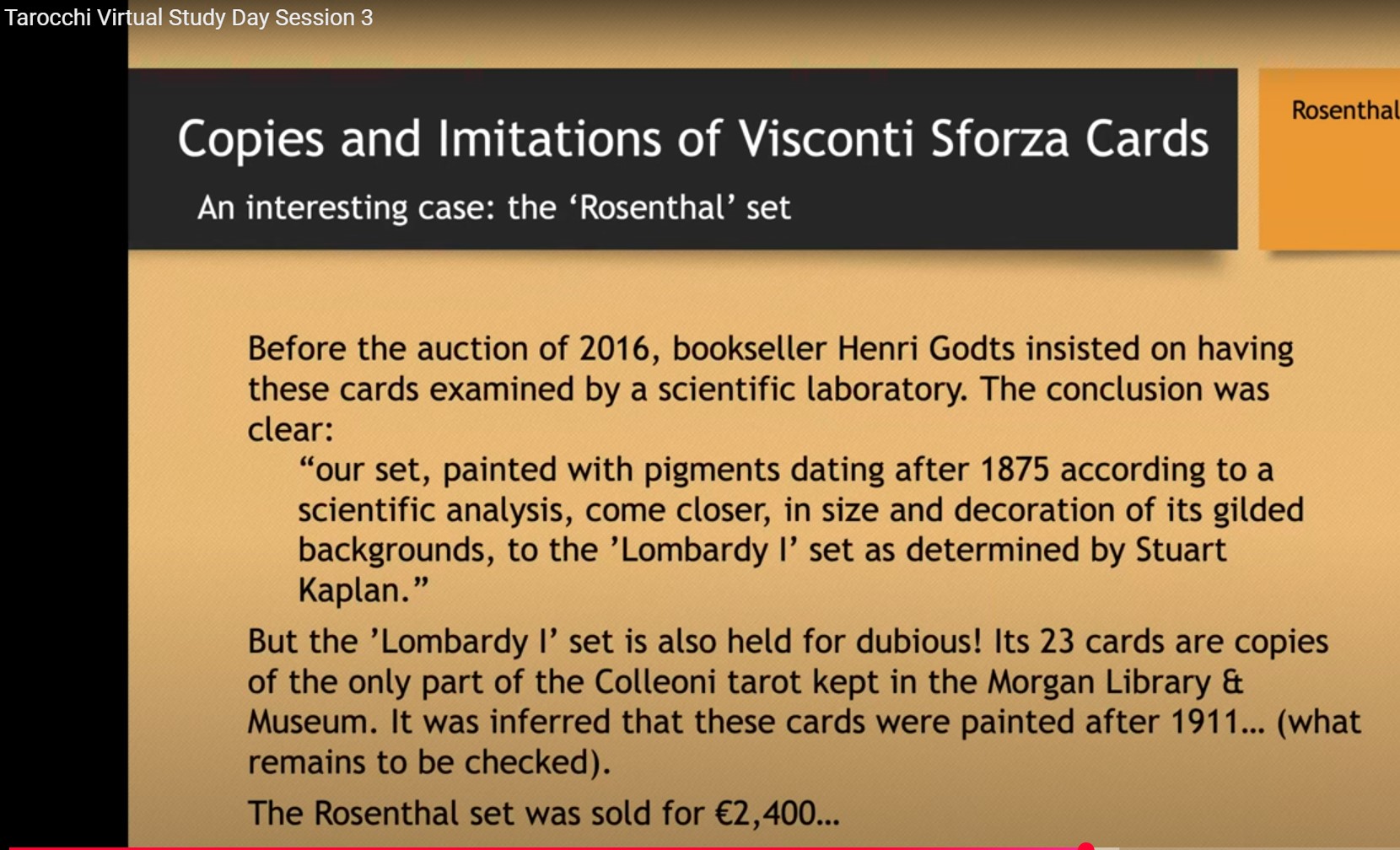
The Rosenthal cards were painted after 1875.
Thierry Depaulis talked about them in the Morgan Library "Virtual Study Day" Session 3
https://www.youtube.com/watch?v=4cpuExcATio
Depaulis at 54:00-1:12 minutes (note that he uses the term "Colleoni" instead of "Visconti-Sforza").
The Victoria & Albert Museum cards have not yet been forensically studied. But the Rosenthal set, whose Star (as above) and Ace of Cups are identical to those of the V&A, were found in 2016 to contain pigments only used after 1875.
Image

Re: Bolognese sequence

382
Magic Moon wrote,
I thought Sminchiate was a word used by players from Bologna, when they probably didn't use a Minchiate-Germini deck but rather a Bolognese Tarot. In Berni's text, perhaps Sminchiate refers to the Minchiate-Germini deck (as you suggest) or perhaps it refers to a game or type of bet within the game with Tarot or Minchiate-Germini cards.
On the meaning of "sminchiate" in the context of Berni, see Franco at https://naibi.net/A/509-VELLETRI-Z.pdf. He has some good arguments for why it would be the same game as minchiate.

Re: Bolognese sequence

383
Mikeh, thanks for the Pratesi PDF. I was able to translate it automatically!

Ross, I saw that lecture thanks to your comment on Facebook. Very interesting. I'd like to know the measurements and back color of each Rosenthal card. I imagine this information isn't available. I think the Ace of Cups isn't identical in Rosenthal and V&A. The Colleoni coat of arms is incorrect in Rosenthal when we look at the distribution of the three hearts. I possibly misunderstood your comment about identical cards. Perhaps this doesn't matter much. I've written you privately to answer your question about my problem on Facebook. I'm a beginner, but I hope you receive my private message on THF correctly. Thanks!

Huck, that image of a person with a crown has markings from the coat of arms of Florence. Right? They are six small circles distributed just like the Chariot pennants in the Charles VI deck. There are six dots in a circle and another dot in the center. The Medici coat of arms normally lacks the ball in the center, but you say the Carriage of Charles VI has the coat of arms of Florence. I haven't seen a Florentine coat of arms with the ball in the center, but I imagine that variant existed. True? Those seven balls or dots are also common as a small repeating pattern in the punched-out decoration done in gold on the typical Visconti Bembo playing cards. Did you notice that detail? Perhaps that also came from Florence. Please, can you tell us where you saw those images of a lady with a crown and a chessboard with the ship's motto? Are you saying it's a deck for which you have no information?
Previously, you said that Isabella d'Este possibly created these Visconti Sforza-type decks for the coronation in 1512. Now, you think that those decks weren't created between 1500 and 1512? If the motto is after 1504, then the decks are after 1512? Isabella d'Este wrote a lot and possibly before 1504 she did not have that motto because apparently she does not mention it in her writings.

Re: Bolognese sequence

384
Medici heraldry ....
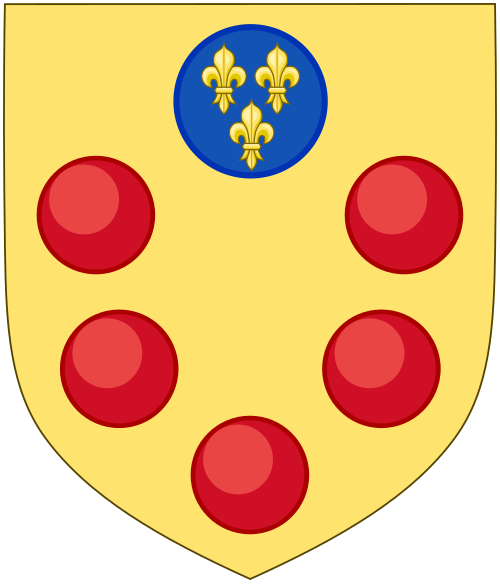
Bild_2025-05-24_052500063.png Bild_2025-05-24_052500063.png Viewed 4484 times 61.56 KiB
https://www.theflorentine.net/2012/03/2 ... ici-balls/

Usually 6 balls, not 7

*********************

Florence heraldry ...
Flag of Florence
Bild_2025-05-24_054244763.png Bild_2025-05-24_054244763.png Viewed 4484 times 22.95 KiB
Coat of arms of Florence
I remember, that the top ball of the Medici sign became blue with flower (fleure-de-lis) around 1465. This had something to do with specific relations to the French king. Mainly this had something to do with good trade conditions, but also with the poet Pulci and his Morgante and possibly also with Minchiate, which appears at this time.
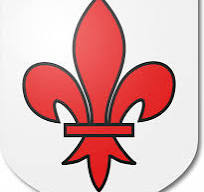
Bild_2025-05-24_054443506.png Bild_2025-05-24_054443506.png Viewed 4484 times 34.7 KiB
***************
Bild_2025-05-24_073733304.png Bild_2025-05-24_073733304.png Viewed 4475 times 419.96 KiB
Yes, the chariot has the 7 dots.
There is a legend about Averardo, a knight fighting for Charlemain.
https://en.wikipedia.org/wiki/Averardo_de%27_Medici
https://medicipodcast.com/2020/11/07/ep ... boom-town/
Sometime before the dawn of the fourteenth century, a family named the Medici moved from a small village in the Mugello Valley in the Apennines to the bustling city of Florence. Eventually, they became successful bankers and one member was elected to the republic’s top office. They also jumped right into the city’s latest violent class and factional civil war.
Once upon a time, there was a courageous knight named Averardo. He fought well for Emperor Charlemagne, freeing Italy from the tyranny of the Lombards. While traveling through the Mugello Valley, he caught word of a giant who was terrorizing the people who lived there. Averardo challenged this Goliath to one-on-one combat. The giant tried to brain Averardo with his mace, but he lifted his golden shield at the pivotal moment, holding the shield so strongly that the mace shattered against it. However, it left the shield dented with the iron balls off the mace. Even with his shield damaged, however, Averardo was able to overpower and kill the cruel giant. Impressed by his feats, Charlemagne himself granted Averardo the right to use the dented shield, iron balls and all, as his family insignia. With that, Averardo graciously accepted the invitation of the people he liberated to settle in the valley. There, his descendants became known as the Medici family.
etc.
In another world around 1460 the poet Luigi Pulci had (or his family had it) a mill in the Mugello and not too far of this mill was a villa or a castle of the Medici and Lorenzo de Medici's mother was occasionally there with her children and some friends of the children and these fought their knightly adventures in the forest. And Pulci was engaged to write the "Morgante" to please the French king and its important trade conditions and also it was very practical to have Pulci in the household and in the forests with the many boys. He was sitting on a tree stump, making his poetry and occasionally managing the peace contracts if necessary.
This was succesfull, and some of his pupils developed some poetry or other works. In this creative circle a few years later Minchiate was born. And possibly also this Charles VI deck.

I got the info about the cards on a private way.

Between 1500 and 1512 France reigned in Milan. There was no opportunity to make a Trionfi deck with Sforza-Visconti heraldry. Isabella d'Este used the "nec spe nec metu" - motto since 1504/05.
Isabella d'Este helped Massimiliano Sforza to get the reign in Milan in 1512. Massimiliano had the rule till 1515. Then France came back. France lost Milan again with the battle of Pavia. A Croatian general had helped to free Milan .... in 1512 or in the battle of Pavia.

Re: Bolognese sequence

385
Huck wrote: 22 May 2025, 11:12 It is the same motto and it is the same Croatian flag and both pictures are playing cards and the other card is part of other cards, from which at least one is identical to other Visconti-Sforza cards. That's a 99.9 % case. A Croatian flag.


Obi profanum vulgu et arceo
As it appears you only have that detail and not the full pic or provenance then it's not clear to me how we can be certain that it is a detail from a playing card. Even if not from a card, its provenance would still be interesting.

The red blocks on the sail of the ship appear to make up a type of cross - it is not a checkerboard pattern of red & white squares, so any connection with the Croatian flag is very speculative and requires more than a little squinting of the eyes & heavy dose of confirmation bias.

Lines from Horace used as mottos in common usage was second only to Virgil - a brief search led me to 11 examples of the use of Ode 3.1.1 in a few minutes and I have no doubt I could find more with a deeper search - without an assessment of how common iits use was one should be wary of making any probability claims based upon it alone. So it seems to me you are far short of making a 99.9% case based upon what you have shared with us.

Re: Bolognese sequence

386
Huck wrote: 24 May 2025, 04:30 Medici heraldry ....
Bild_2025-05-24_052500063.png
https://www.theflorentine.net/2012/03/2 ... ici-balls/

Usually 6 balls, not 7
We have discussed before I think, in other threads, on how the number of balls varied from 6 to 8.

According to one, perhaps now outdated, source:

"The shield, bearing seven red balls on a field of gold, represents the arms of Piero de' Medici, and the period when Medicean supremacy was at its height; in the sequence of balls employed by the various members of the family, it serves to connect the eight balls displayed on the arms of Cosimo, Pater Patriæ, the munificent financier, with the six balls of Lorenzo the Magnificent, in whom the glory and renown of the family culminated."

From the preface to The Medici Balls : SEVEN LITTLE JOURNEYS IN TUSCANY by ANNA R. SHELDON & M. MOYCA NEWELL, 1904.


Amphora with Medici arms bearing 7 palle:
Attachments
MedAmphora.jpg MedAmphora.jpg Viewed 4459 times 110.39 KiB

Re: Bolognese sequence

387
Steve. Nice, I find 7 palle here in some pictures.

viewtopic.php?p=24364#p24364

This is interesting. I dont find any image wirh 8 palle. But, that is ok...

It seems that sometimes the lis flower is in the center palle and lot of times is in the higer palle. Ok.

Huck. Nice story about Averardo.

Mikeh. Nice text by Pratesi. Then, the "sminchiate" word used out of Florencia (XVI-XVII centuries) was originated in "minchiate" name used in Florencia about Minchiate game cards (1466-¿1506?). I was thinking about this: some documents in early XVI century mention "minchiate" or "sminchiate" game cards and I dont know if this game is the first Minchiate (1466) or Germini (1506). I think that Germini had 20 cards more than First Minchiate (1466). And I think that they had different card: joking Bagatto in Minchiate but Fool in Germini.

I hope to study some information about Florencia production cards. I think that Pratesi found documents about 1460-1550 aprox. But this is mixed with comon cards (4 suits). We are interested in: trionfi, minchiate, germini and ¿tarocchi? In this period aprox. And probably there are Florencia comercial documents before exporting to Rome (1474). I think that I remember something like that in Pratesi information (trionfi.com). Probably it was only about trionfi. Not about Minchiate neither Germini. But trionfi and ¿tarot? in Florencia is interesting.

And in Bologne it is interesting too. I remember that xilografic production of Bolognese Trionfi existed since ¿1458 or 1477? I dont know if we have information about Trionfi production in Bologne (1460-1550). I remember some few and early documents but I am lost about comercial and production documents that Pratesi found. Sorry. That could help us to understand the evolution from trionfi to tarot.

Thanks

Re: Bolognese sequence

388
SteveM wrote: 21 May 2025, 13:37
Fastidiosus: sed Timor et Minae
scandunt eodem quo dominus, neque
decedit aerata triremi et
post equitem sedet atra Cura.

But still, Fear and Menace
climb aboard with their owner.
They don’t leave his bronze-trimmed ship;
Angst, black-robed, rides right behind him.


aerata triremi = elite ships—luxury travel.
In the first edition of Bond's commentaries from Didot's press, 1855. First page of Book 3 of Horace's Odes has this illustration, possibly inspired by the lines above from the first Ode.
Attachments
HoraceDidot.jpg HoraceDidot.jpg Viewed 4408 times 918.2 KiB

Re: Bolognese sequence

389
Magic Moon wrote
And in Bologne it is interesting too. I remember that xilografic production of Bolognese Trionfi existed since ¿1458 or 1477? I dont know if we have information about Trionfi production in Bologne (1460-1550). I remember some few and early documents but I am lost about comercial and production documents that Pratesi found. Sorry. That could help us to understand the evolution from trionfi to tarot.
On trionfi in Bologna, see Ross at viewtopic.php?p=22352#p22352, including his links.

Re: Bolognese sequence

390
Huck, where do you think that Sola Busca was created? Where do you think was in these moment the Lucca Tarot sequence that you see in Sola Busca?